
Common Paint Protection Film Installation Mistakes and How to Prevent Them
Paint Protection Film (PPF) is a transparent, durable polyurethane layer applied to a vehicle's exterior to shield the factory paint from rock chips, road debris, and environmental contaminants. According to the Polyurethane Coatings Association, high-quality PPF can extend the lifespan of a vehicle's clear coat by up to ten years when installed correctly. However, the difference between a flawless, invisible finish and a costly failure often comes down to the installer's technique. Even minor errors during the application process can lead to peeling, discoloration, or visible edges that ruin the aesthetic value of the investment. (Car Wrap Cost Utah)
The Critical Role of Environmental Factors
One of the most overlooked aspects of PPF installation is the environment in which the work takes place. Dust, humidity, and temperature fluctuations can compromise the adhesive properties of the film before it even touches the paint. Professional installers work in climate-controlled, dust-free bays to ensure a sterile application surface. When installation occurs in an uncontrolled garage or outdoor setting, airborne particles become trapped under the film, creating permanent bumps and imperfections that cannot be removed without replacing the material.
Temperature also plays a pivotal role in the film's behavior. PPF must be heated to become pliable enough to conform to complex curves and body lines. If the film is too cold, it will resist stretching and may snap or tear. Conversely, if the film is overheated, the adhesive can break down, leading to premature yellowing or loss of tack. Summit Wraps & Graphics maintains strict climate controls in our Lehi facility to ensure every roll of 3M or Avery Dennison vinyl performs exactly as engineered. For more details on our climate-controlled process, visit our services page.
Surface Preparation Errors
Paint Protection Film is only as good as the surface it adheres to. A common and catastrophic mistake is insufficient surface preparation. If the vehicle's paint contains even microscopic amounts of wax, silicone, or dirt, the film will not bond correctly. This leads to "tacking" issues where the film lifts at the edges or forms bubbles that refuse to release.
Proper preparation involves a multi-stage decontamination process. This includes a thorough wash, followed by a clay bar treatment to remove bonded contaminants, and finally, an alcohol-based wipe-down to strip any remaining oils. Skipping the clay bar step is a frequent error among DIY enthusiasts. Without this step, the film will sit on top of contaminants rather than bonding to the clear coat. This is why professional installation is critical; we use industrial-grade prep solutions to ensure a chemically pure surface. Learn more about our paint protection film specifications and warranty.
Squeegee Technique and Air Trapping
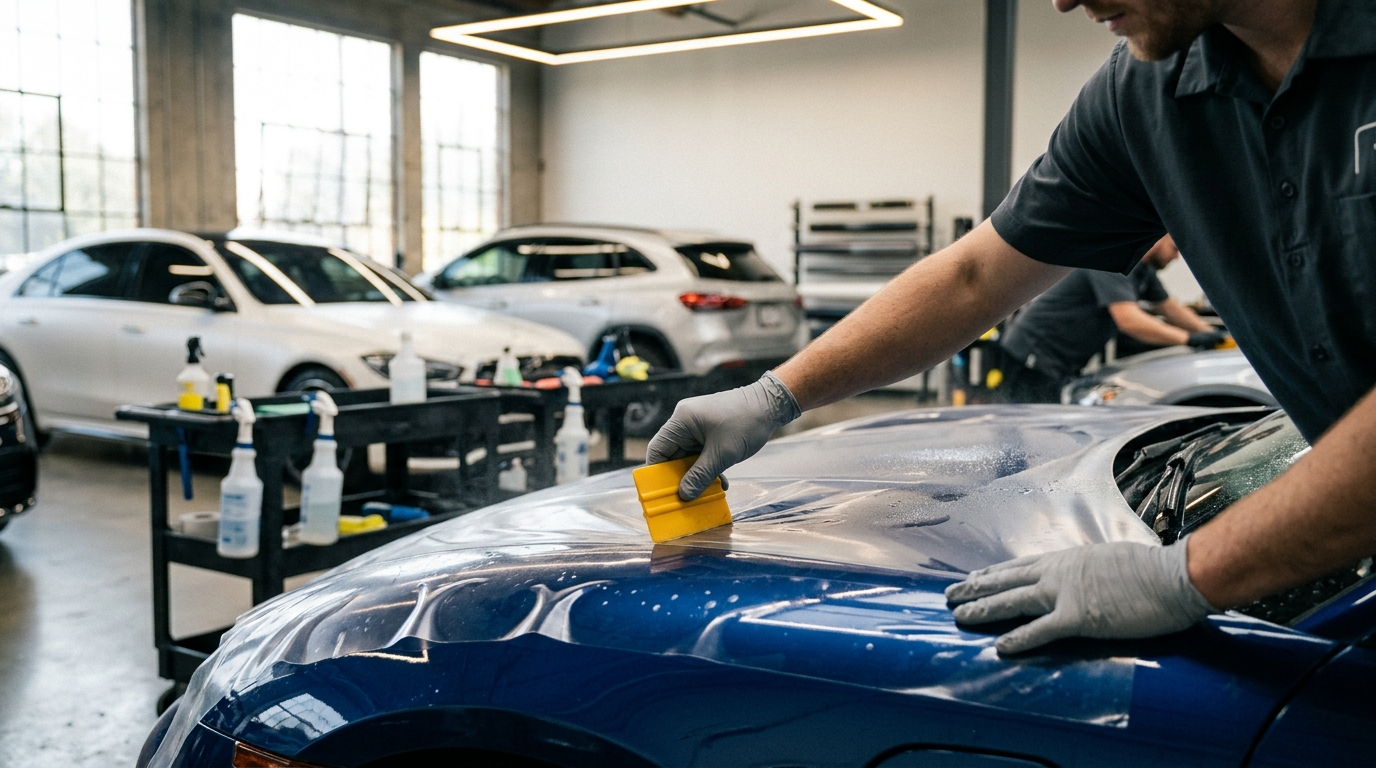
The squeegee is the primary tool for expelling air and installation fluid from beneath the film. However, using the wrong pressure or angle can cause significant damage. A common mistake is using excessive force on the edges of the film. This can stretch the vinyl beyond its elastic limit, causing it to retract laterally and lift off the paint after installation. This phenomenon is known as "edge lift" and is one of the most frequent reasons for PPF failure.
Another error is improper fluid management. Too little slip solution makes the film stick instantly, trapping air bubbles that are impossible to remove. Too much fluid can dilute the adhesive, reducing its long-term hold. Professional installers use a precise ratio of water and slip agent to allow for micro-adjustments before the final tacking phase. We utilize a layered squeegee technique, starting with a hard card for initial adhesion and finishing with a soft cloth to ensure a smooth, bubble-free finish. For a deeper dive into our installation methodology, check out our about page.
Edge Management and Lifting
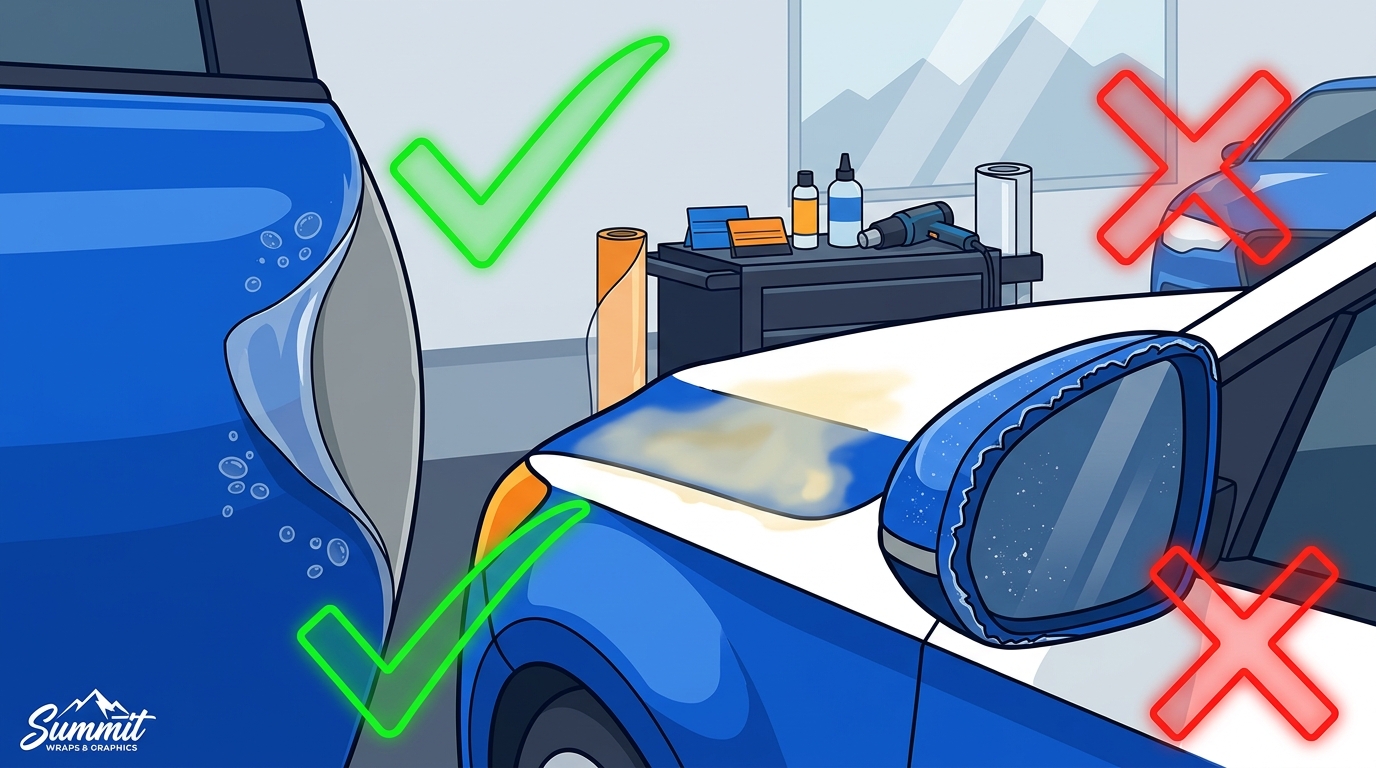
How the edges of the film are handled determines the longevity of the installation. A common mistake is leaving the edges raw and exposed to the elements. Over time, UV exposure and car wash chemicals will degrade the raw edges, causing them to curl and collect dirt. This not only looks unprofessional but also creates a pathway for moisture to get under the film.
Professional installers wrap the edges around the panel or tuck them into seams where possible. This "wrap-around" technique hides the edge and protects it from direct exposure. On panels where wrapping is not feasible, the edges are carefully burnished and sealed. Summit Wraps & Graphics specializes in edge-wrapping techniques that ensure your PPF remains invisible and secure for years. We serve businesses and individuals across Utah County and Salt Lake County with this precision.
Material Selection and Stretching Limits
Not all Paint Protection Film is created equal. A critical mistake is using low-quality, non-self-healing film on high-impact areas. Cheap films lack the elastomeric properties required to stretch over complex curves without tearing. They also lack the top coat that allows minor scratches to heal with heat exposure. This results in a film that looks dull and scratched within months of installation.
High-end films, such as those from 3M and Avery Dennison, are engineered with advanced polymers that allow for significant stretching without compromising integrity. These films also feature hydrophobic top coats that repel water and dirt, making maintenance easier. Choosing the right material is just as important as the installation technique. We only use premium, warranty-backed materials to ensure your investment is protected. See our gallery for examples of our premium work.
PPF Installation Risk Matrix
| Mistake Category | Common Cause | Resulting Defect | Prevention Strategy |
|---|---|---|---|
| Environmental Contamination | Dust in uncontrolled spaces | Permanent bumps under film | Use climate-controlled, dust-free bays |
| Surface Prep Failure | Skipping clay bar or alcohol wipe | Adhesive failure and lifting | Multi-stage decontamination process |
| Improper Squeegee Use | Excessive edge pressure | Edge lift and retraction | Controlled pressure and slip solution |
| Material Quality | Using non-self-healing vinyl | Yellowing and scratching | Use premium 3M or Avery Dennison |
Key Takeaways
- PPF installation requires a dust-free, climate-controlled environment to prevent contamination.
- Surface preparation must include clay barring and alcohol wiping for proper adhesion.
- Excessive pressure on film edges causes retraction and lifting over time.
- Premium materials like 3M and Avery Dennison offer self-healing properties and longevity.
- Edge wrapping or tucking is essential for hiding film boundaries and protecting edges.
- Professional installation in Lehi, Utah, ensures warranty validity and quality assurance.
- DIY attempts often result in higher long-term costs due to reinstallation needs.
Frequently Asked Questions
How long does Paint Protection Film last?
High-quality PPF from brands like 3M and Avery Dennison typically lasts between 7 to 10 years, depending on environmental exposure and maintenance. Our installations come with a 5-year warranty against yellowing and peeling.
Can I install PPF myself?
While DIY kits are available, the margin for error is extremely small. Without professional tools and a controlled environment, the risk of bubbles, edge lift, and contamination is very high. Professional installation is recommended for a flawless finish.
Does PPF yellow over time?
Older or lower-quality films can yellow due to UV exposure. Modern premium films have UV inhibitors that prevent yellowing for years. Summit Wraps & Graphics uses only non-yellowing, self-healing films.
Is PPF visible on my car?
When installed correctly by professionals, PPF is virtually invisible. It conforms to the body lines and has a glossy finish that matches the factory clear coat. Poor installation can make edges visible, which is why technique matters.
How do I maintain PPF?
Maintaining PPF is similar to maintaining paint. Wash regularly with pH-neutral soap, avoid abrasive brushes, and apply a ceramic coating or sealant designed for PPF to enhance hydrophobic properties.
What is the cost of PPF in Utah?
Cost varies based on the vehicle size and coverage area. Partial wraps start lower, while full front-end or full-vehicle wraps cost more. Contact us for a free quote tailored to your vehicle.
Does PPF protect against rock chips?
Yes, PPF is specifically designed to absorb the impact of road debris, stones, and gravel, preventing chips and scratches from reaching the underlying paint.
Get Your Vehicle Protected
Don't let common installation mistakes compromise your vehicle's value. Summit Wraps & Graphics offers expert Paint Protection Film installation in Lehi, Utah, using premium materials and climate-controlled facilities. Whether you need a full front-end wrap or complete vehicle protection, our team ensures a flawless, invisible finish. Get a free quote today and drive with confidence.