
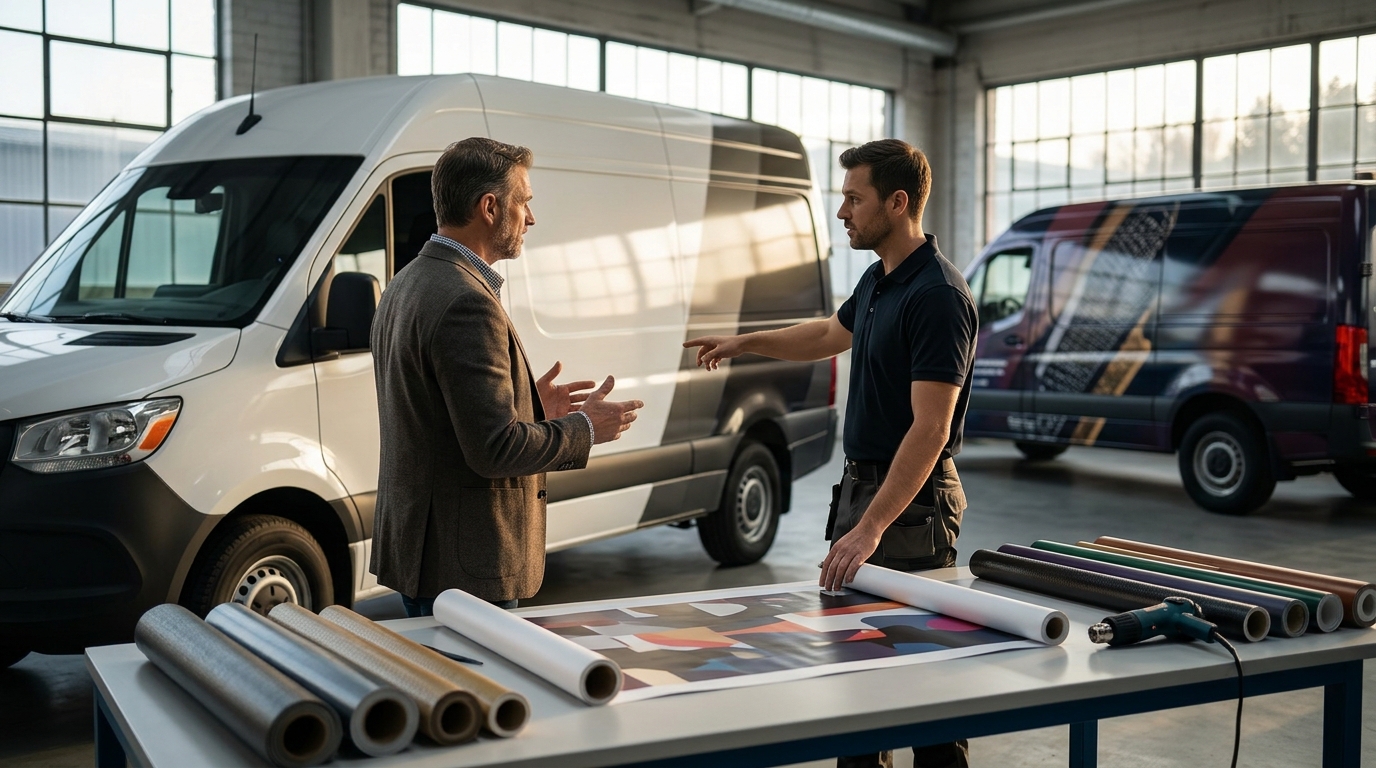
7 Factors That Determine Commercial Vehicle Wrap Costs and Coverage
Commercial vehicle wrap costs vary significantly based on vehicle dimensions, material quality, and design complexity. Understanding these variables helps business owners budget accurately and select the right coverage level for their marketing goals. Summit Wraps & Graphics provides transparent pricing and in-house design services to help Utah businesses make informed decisions about their fleet branding. according to 20 Vehicle Wrap
1. Vehicle Size and Surface Area
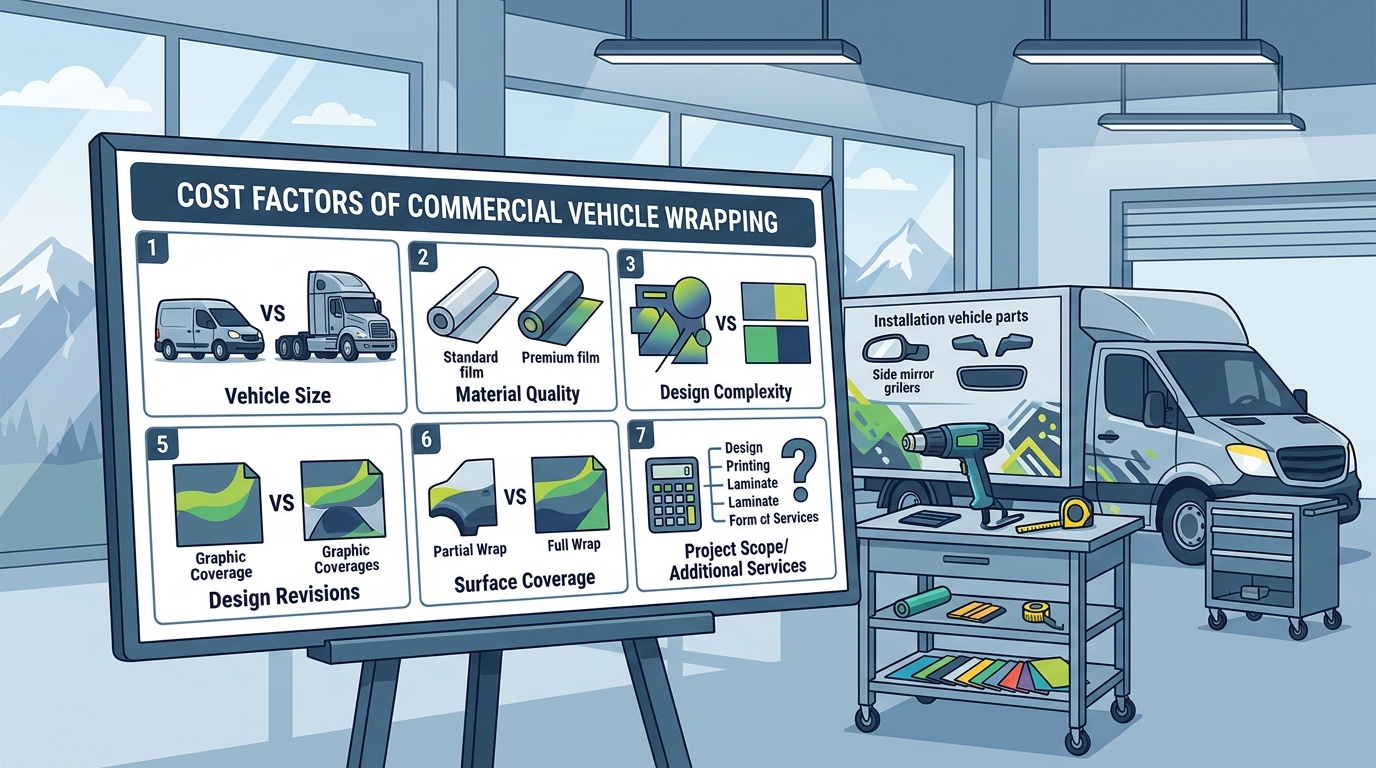
Larger vehicles require more vinyl material and installation time, directly increasing the total project cost. A compact sedan uses roughly 50 feet of vinyl, while a full-size truck or SUV requires 65 to 75 feet. Larger commercial vehicles like Sprinter vans or box trucks can require over 100 feet of material, which significantly impacts the final price due to both material costs and the complexity of body lines.
2. Vinyl Material Quality and Type
Premium cast vinyl from manufacturers like 3M and Avery Dennison costs more but offers superior durability and color retention. Cast vinyl conforms to complex curves without shrinking and holds its color for 5 to 7 years. Using lower-quality calendered vinyl may reduce upfront costs but often leads to premature peeling, fading, and a shorter lifespan, which can be more expensive in the long run.
3. Design Complexity and Customization
Intricate designs with multiple colors, gradients, or custom illustrations require more time and skill to print and install. Simple single-color wraps with basic logos are faster to produce than complex multi-layered graphics. Summit Wraps & Graphics includes professional base design in their quotes, but highly custom artwork may involve additional design fees depending on the scope of the creative work required.
4. Coverage Level and Wrap Type
Full wraps offer maximum visibility but cost more than partial wraps or spot graphics. A full wrap covers the entire vehicle, while a half wrap covers roughly 50% of the surface area. Partial options like hood wraps, roof wraps, or door graphics allow businesses to achieve branding impact at a lower price point, making them ideal for startups or businesses with tighter budgets.
5. Fleet Size and Volume Discounts
Wrapping multiple vehicles often results in lower per-unit costs due to streamlined production and installation processes. Businesses with fleets of three or more vehicles typically qualify for priority scheduling and volume discounts. This efficiency allows wrap shops to optimize their workflow, reducing the overall cost per vehicle while ensuring consistent branding across the entire fleet.
6. Installation Complexity and Vehicle Condition
Vehicles with complex curves, damaged paint, or difficult-to-reach areas require more time and expertise to wrap properly. A vehicle in poor condition may need surface preparation or repair before wrapping, which adds to the cost. Professional installers like those at Summit Wraps & Graphics ensure that every panel is measured, test-fitted, and inspected to guarantee a flawless finish regardless of the vehicle's complexity.
7. Warranty and Long-Term Value
Higher-quality wraps come with longer warranties that protect your investment over time. Premium vinyl wraps typically include a 4-year film warranty and a 6-month installation warranty. This coverage ensures that any defects in the material or installation are addressed without additional cost, providing peace of mind and long-term value for your business.
Choosing the Right Coverage for Your Budget
Select the coverage level that aligns with your marketing goals and budget constraints. If you need maximum visibility, a full wrap is the best option. If you are working with a tighter budget, consider a partial wrap or spot graphics to achieve a professional look without the full cost. Always prioritize quality materials and professional installation to ensure your wrap lasts as long as possible.
Frequently Asked Questions
How much does a commercial vehicle wrap cost in Utah?
Commercial vehicle wraps in Utah typically range from $3,100 to $4,700 per vehicle, depending on the vehicle size, material quality, and design complexity. This price usually includes custom design, premium vinyl, and professional installation.
What is the difference between a full wrap and a partial wrap?
A full wrap covers the entire vehicle, providing maximum branding visibility. A partial wrap covers only specific areas, such as the hood, roof, or doors, offering a more affordable option for businesses with limited budgets.
How long does a commercial vehicle wrap last?
With proper care and premium materials, a commercial vehicle wrap can last 5 to 7 years. Regular cleaning and avoiding harsh chemicals will help extend the lifespan of the wrap and maintain its appearance.
Do I need to bring my own design for a vehicle wrap?
No, most professional wrap shops, including Summit Wraps & Graphics, offer in-house design services. They can create a custom wrap mockup based on your brand guidelines and vehicle type, ensuring a professional and cohesive look.
Can I remove a vehicle wrap and restore the original paint?
Yes, vehicle wraps are fully removable. When removed properly, the factory paint underneath is usually left in pristine condition, allowing you to restore the vehicle to its original appearance or apply a new wrap in the future.