
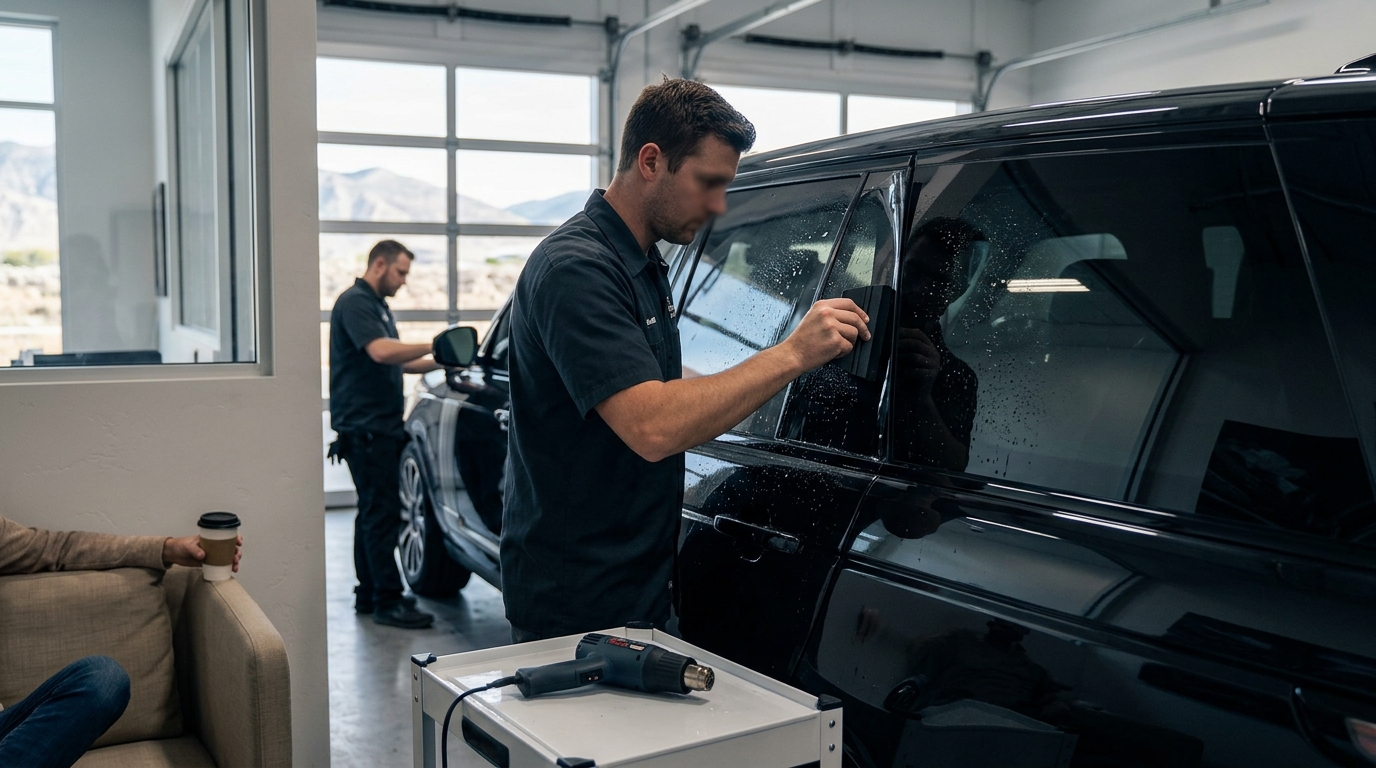
Utah County experiences extreme summer heat that degrades vehicle interiors and increases cabin temperatures by over ninety degrees Fahrenheit. This intense solar radiation forces drivers to rely heavily on air conditioning, which directly impacts fuel efficiency and passenger comfort. Professional window tinting provides a proven solution by blocking harmful ultraviolet rays and reducing interior heat buildup. Local businesses and vehicle owners increasingly prioritize certified installers who combine precision craftsmanship with durable materials. Finding the right provider requires understanding film technology, installation standards, and long-term warranty coverage. (Car Wrap Cost Utah)
Understanding Window Tint Quality and Heat Rejection
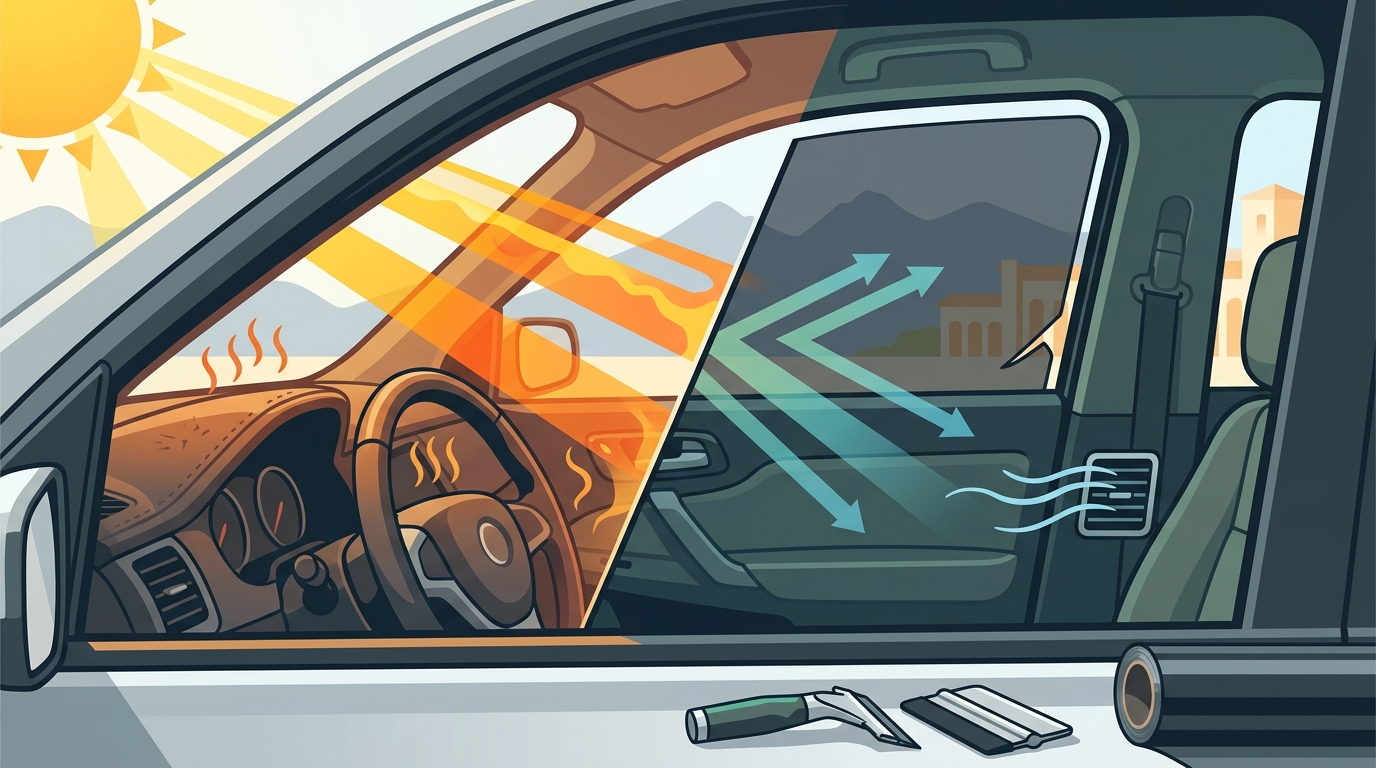
Window tinting technology has evolved significantly over the past decade. Modern films utilize advanced ceramic and carbon nanotechnology to block infrared radiation without darkening the glass excessively. Heat rejection window tint is a specialized film engineered to reflect solar energy while maintaining optical clarity. High-quality films prevent up to ninety-nine percent of ultraviolet radiation from penetrating vehicle glass or commercial buildings. This protection preserves dashboard materials, leather upholstery, and office furnishings from premature fading. UV protection remains the primary health benefit for drivers and building occupants alike.
Many consumers confuse darkness with performance. Visible light transmission percentages determine how much light passes through the glass. A twenty percent VLT rating allows less light to enter compared to a thirty-five percent rating. However, darker films do not automatically block more heat. Ceramic films excel at blocking infrared energy regardless of their visible darkness level. This distinction matters greatly for Utah drivers who need maximum cooling without compromising nighttime visibility.
Ceramic vs. Carbon Film Technology
Ceramic window tinting is a premium film construction that uses non-conductive ceramic particles to block heat and ultraviolet radiation. Carbon window tinting is a mid-tier film option that relies on dyed carbon fibers to reduce glare and block some solar energy. Both options outperform traditional dyed films, but ceramic films offer superior longevity and signal transparency. Automotive electronics like GPS receivers and mobile networks operate without interference when ceramic films are installed correctly.
Key Factors That Define a Top-Tier Tint Shop
Evaluating local providers requires examining their installation standards, material sourcing, and customer support protocols. The best window tint shop Utah County residents trust will always prioritize precision cutting and edge sealing techniques. Professional installers use computer-guided cutting systems to eliminate manual trimming errors. This technology ensures perfect alignment along window curves and defroster lines. Film standards established by industry associations dictate minimum performance thresholds for heat and UV blocking.
Warranty coverage represents another critical evaluation metric. Reputable shops stand behind their work with lifetime manufacturer warranties that cover bubbling, peeling, and discoloration. These guarantees protect your investment and demonstrate confidence in material quality. You should always verify warranty terms before signing a service agreement. Authorized dealers receive direct training from major film manufacturers like 3M, Llumar, and XPEL. This certification ensures proper handling, storage, and application procedures.
Material Sourcing and Certification Standards
Unauthorized shops often source gray market films that lack manufacturer backing. These unverified products frequently fail within two years under intense solar exposure. Certified installers carry liability insurance to cover accidental glass damage during complex installations. Always verify dealer credentials before scheduling service. Summit Wraps & Graphics maintains authorized dealer status to guarantee genuine materials and full warranty enforcement.
Summit Wraps & Graphics: Local Craftsmanship and Speed
Summit Wraps & Graphics operates a dedicated facility in Lehi that serves the entire Wasatch Front region. The company has successfully completed over five hundred vehicle wraps and tinting projects across Utah County and Salt Lake County. Their in-house printing and production capabilities allow them to manage complex commercial graphics alongside precision window tinting. This vertical integration eliminates third-party shipping delays and guarantees consistent quality control. Window tinting services are fully integrated into their commercial vehicle graphics workflow.
The leadership team emphasizes speed without sacrificing accuracy. Most commercial vehicle tinting projects are completed within a few days of final design approval. Clients receive direct communication throughout the installation process. This transparency builds trust and eliminates the guesswork that often accompanies automotive services. Their gallery showcases recent fleet and residential projects that demonstrate consistent edge sealing and bubble-free finishes.
Local Expertise and Regional Adaptation
Utah County experiences harsh winter conditions alongside intense summer sun. Window films must withstand extreme temperature fluctuations without cracking or adhesive failure. Summit Wraps & Graphics selects films specifically rated for continental climate variations. Their installation protocols account for seasonal humidity levels and garage storage environments. This regional adaptation ensures long-term durability across all vehicle types. About the team details their commitment to local craftsmanship and accountability.
Commercial vs. Residential Window Film Applications
Business owners require different film specifications than individual vehicle owners. Commercial window film installation focuses on energy conservation, glare reduction, and security enhancement. Large office buildings benefit from spectrally selective films that block heat while maximizing natural daylight. These films reduce HVAC workload and lower monthly utility expenses significantly. Energy savings from properly installed films can reduce cooling costs by up to thirty percent annually.
Residential applications prioritize privacy and UV protection for flooring and artwork. Safety films reinforce existing glass to prevent shattering during severe weather or impact events. Both sectors benefit from professional measurement and custom fabrication. Automated cutting systems ensure precise panel sizing for complex architectural layouts. Business owners can explore comprehensive business wraps to combine fleet graphics with facility window treatments.
Energy Savings and Regulatory Compliance
Government energy agencies report that properly installed window films can reduce cooling costs by up to thirty percent annually. This savings accumulates rapidly for commercial properties with large glass facades. Many Utah municipalities offer rebates for energy-efficient building upgrades. Professional installers provide documentation required to claim these financial incentives. Compliance with local building codes ensures maximum insurance coverage and operational efficiency.
Installation Process and Warranty Expectations
Professional installation begins with thorough glass cleaning and edge preparation. Installers use slip solution to position the film accurately before squeegeeing out trapped moisture. Heat guns are applied to stretch the film over curved rear windows without creasing. The curing period typically requires three to five days of garage parking to allow adhesive bonding.
Lifetime warranties cover manufacturing defects and installation errors. Reputable providers offer transferable warranties that increase resale value for vehicles or properties. Always request written warranty documentation before releasing payment. These documents specify coverage limits and maintenance requirements. Project gallery displays recent installations that highlight precise edge alignment and optical clarity.
Post-Installation Care and Maintenance
Window tint maintenance is a specific cleaning protocol that requires pH-neutral solutions to preserve film integrity. Ammonia-based cleaners degrade adhesive bonds and cause premature discoloration. Professional installers recommend soft microfiber cloths for routine cleaning. Avoid rolling down tinted windows until the adhesive fully cures. This precaution prevents edge lifting and bubbling formation.
Common Mistakes to Avoid When Choosing Tint
Many consumers prioritize price over quality when selecting window films. The cheapest options frequently contain alcohol-based dyes that fade rapidly under solar exposure. These low-grade films turn purple and leave adhesive residue that damages glass surfaces. Investing in certified ceramic or carbon films prevents costly removal and replacement expenses.
DIY installation kits rarely match professional results. Automotive glass features complex curves and defroster lines that require specialized tools. Improper handling creates visible seams, trapped air bubbles, and misaligned edges. Professional installers carry replacement film if errors occur during application. This safety net protects your vehicle from irreversible damage. Insurance industry data confirms that properly tinted vehicles experience fewer interior theft claims due to obscured valuables.
Key Takeaways
- Professional window tinting blocks up to ninety-nine percent of harmful ultraviolet radiation.
- Ceramic films provide superior heat rejection without compromising signal transparency.
- Authorized dealer status ensures manufacturer backing and proper installation training.
- Summit Wraps & Graphics operates a Lehi facility serving the entire Wasatch Front.
- Commercial window film installation reduces cooling costs by approximately thirty percent annually.
- Lifetime warranties protect your investment against bubbling, peeling, and discoloration.
- Post-installation curing requires three to five days of garage parking for full adhesion.
Frequently Asked Questions
How long does professional window tinting typically last?
High-quality ceramic and carbon films last between ten and fifteen years when properly maintained. Lower-grade dyed films often fail within two to three years under intense solar exposure. Manufacturer warranties dictate the expected lifespan and coverage terms.
Is window tinting legal in Utah County?
Utah state law permits front side windows to allow more than twenty-five percent visible light transmission. Rear windows and windshields must remain untinted below the manufacturer's AS-1 line. Professional installers ensure all applications comply with current state regulations.
Can window tinting interfere with electronic devices?
Metallic films may interfere with GPS signals and mobile phone reception. Ceramic films contain non-conductive particles that block heat without disrupting electronics. Always specify ceramic options when maintaining automotive navigation systems.
How much does professional window tinting cost?
Pricing varies based on vehicle size, film type, and window count. Standard sedans typically range from two hundred to four hundred dollars. SUVs and trucks require additional material and labor for larger glass panels. Custom commercial projects require detailed measurement and fabrication quotes.
What is the curing time after installation?
Adhesive bonding requires three to five days to fully cure in warm weather. Cold winter months may extend the curing period to two weeks. Garage parking and avoiding window operation during this timeframe prevents edge lifting.
Does window tinting void vehicle manufacturer warranties?
Professional installation does not void factory warranties unless damage occurs during the process. Reputable shops carry liability insurance to cover any accidental glass damage. Always verify installer credentials before scheduling service.
Next Steps and Service Booking
Utah County drivers and business owners deserve premium window film solutions that withstand extreme seasonal shifts. Summit Wraps & Graphics combines local expertise with certified materials to deliver lasting performance. Their Lehi facility handles everything from single-vehicle tinting to large-scale commercial installations. Contact the team today to schedule a consultation and receive a customized project quote. Visit summitwrapsandgraphics.com to explore available film options and book your appointment.
| Film Type | Heat Rejection | UV Blocking | Signal Transparency | Best Use Case |
|---|---|---|---|---|
| Dyed Film | Low | 40% | High | Budget residential privacy |
| Carbon Film | Moderate | 99% | High | Standard automotive tinting |
| Ceramic Film | High | 99% | High | Premium vehicles and commercial buildings |
| Security Film | Moderate | 99% | High | Commercial storefront reinforcement |